Amazon and Walmart seller fees look similar at first. Both marketplaces take a percentage of each sale and charge more when they store and ship inventory. Your category, price, packed size, storage time, return rate, and fulfillment method can change the result.
That means there is no honest universal winner. A low-priced beauty item, a $30 shirt, and a bulky home product can each produce a different answer.
This guide shows you which fees to compare and how to estimate what you may keep from each sale.
Fee schedules change. The figures below were reviewed in September 2026 for the U.S. marketplaces. Check the official calculators before you price or send inventory.
How Amazon vs. Walmart Seller Fees Work
Your first comparison has two parts: the cost to maintain the selling account and the percentage charged when an item sells.
Start With Fixed Selling Costs
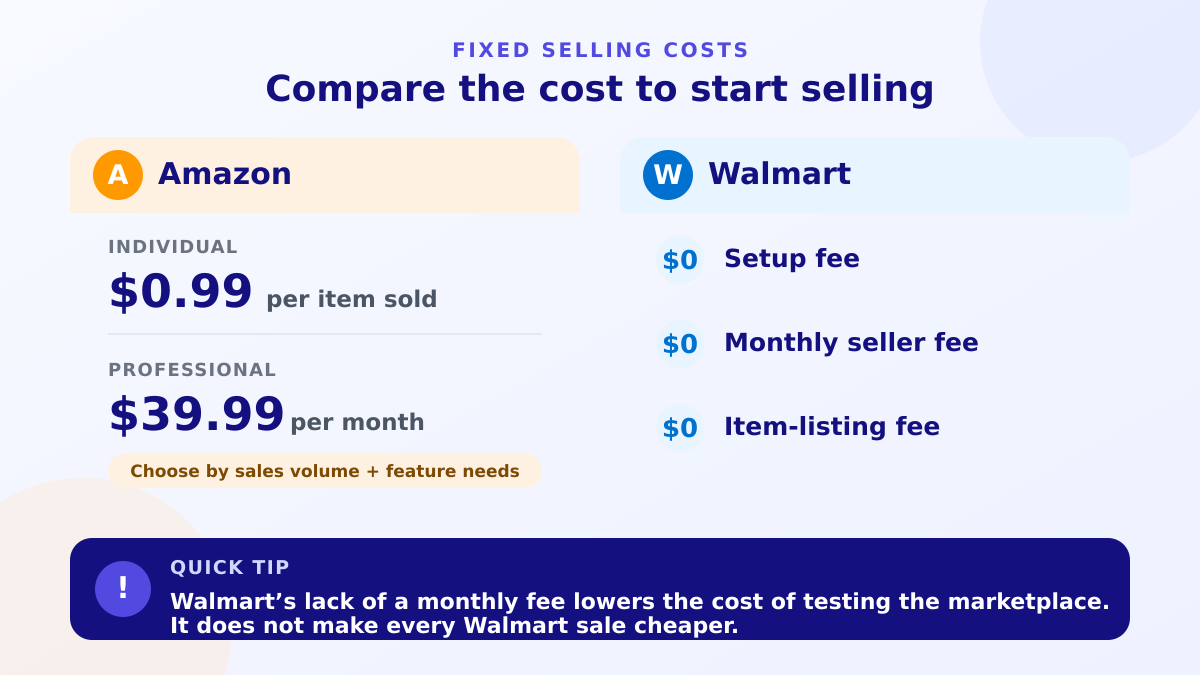
Amazon offers two selling plans. The Individual plan costs $0.99 for each item sold, while the Professional plan costs $39.99 per month. Walmart does not charge setup, monthly subscription, or item-listing fees.
Compare Referral Fees By Category and Price
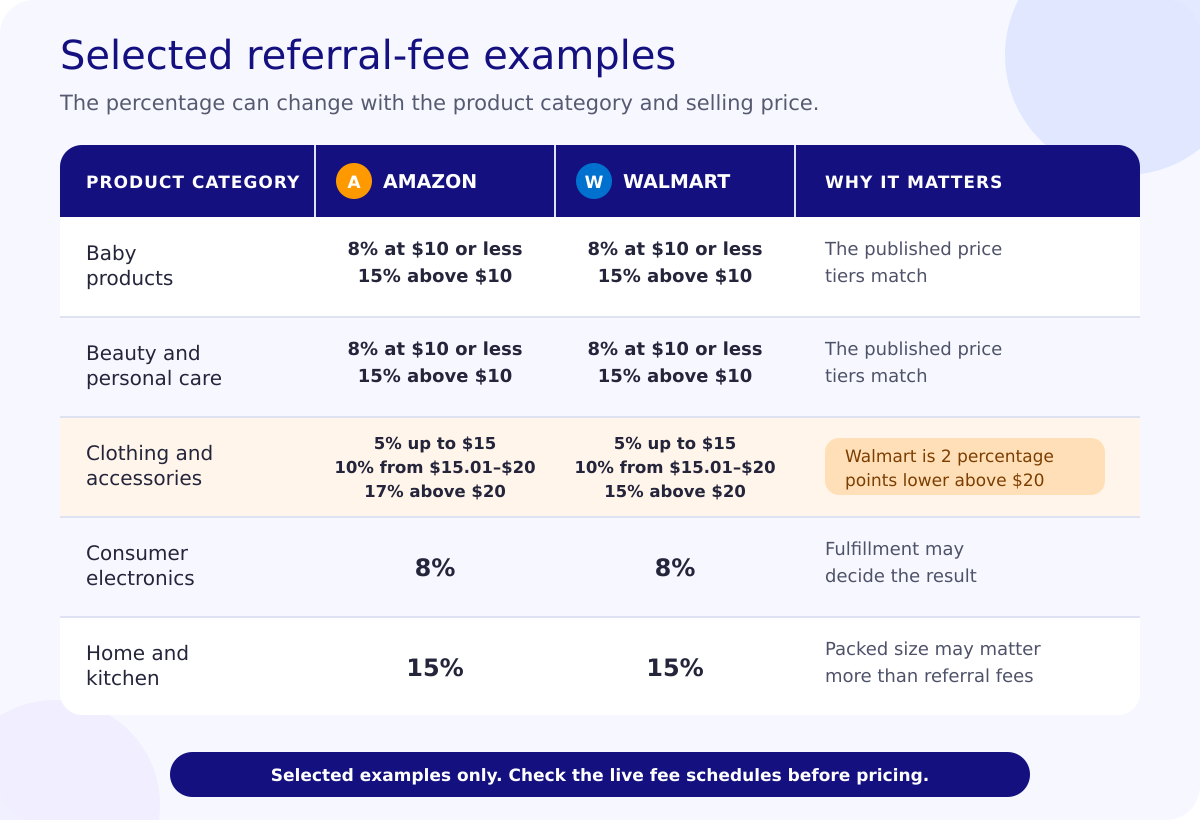
Both marketplaces charge a referral fee based on the item’s sale price and category. Some categories also use price tiers, so two items in the same category may not receive the same rate.
With Fulfillment by Amazon (FBA) or Walmart Fulfillment Services (WFS), the marketplace stores, packs, and ships eligible orders. Your fee depends mainly on size and shipping weight.
WFS starts at $3.45 for many items weighing 1 pound or less, then adds fees for certain low-priced, apparel, hazardous, or oversized items. Amazon uses several size tiers and Low-Price FBA rates for eligible products below $10.
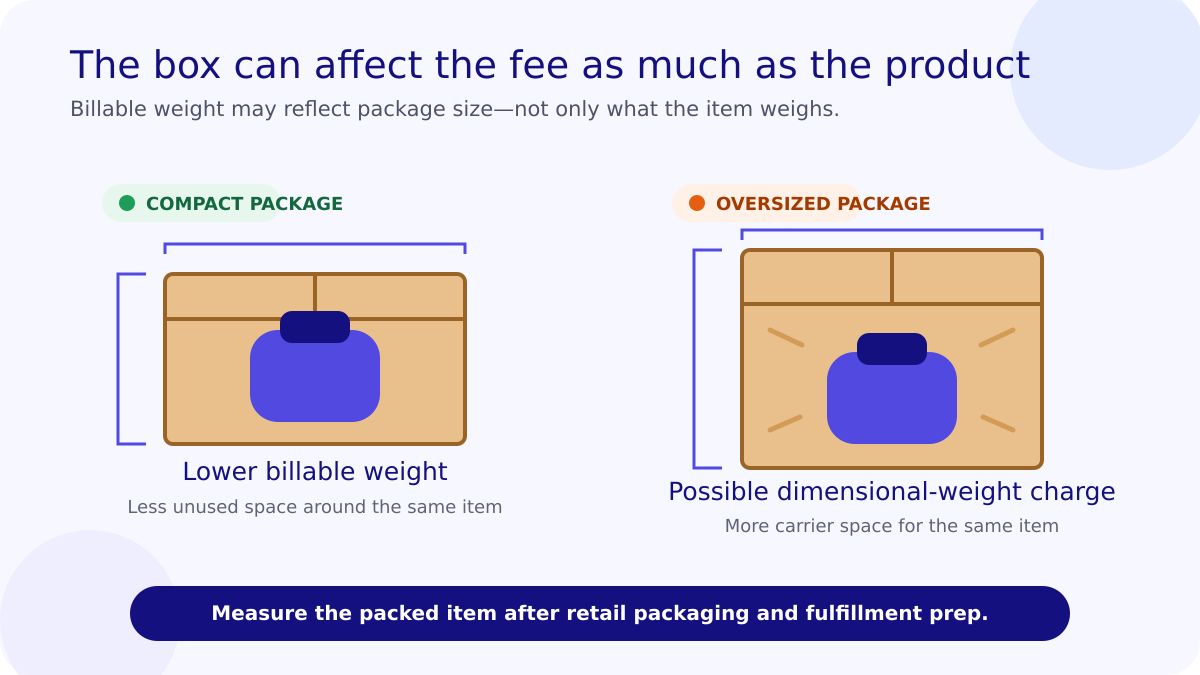
That makes a giant pound-by-pound comparison table less useful than it appears. Even 1 inch of packaging can move an item into another size tier. A light but bulky product may also be billed by dimensional weight.
Use Packed Dimensions, Not Product Dimensions
See Which Product Detail Creates Fee Pressure
Priced Below $10
Apparel
Large or Bulky
Slow Moving
Amazon’s Low-Price FBA rates may reduce fulfillment costs for eligible products. WFS adds $1 to the standard fulfillment fee when the item’s price is below $10. Compare both programs with the exact price, size, and category.
Amazon and Walmart both use apparel price tiers up to $20. Above $20, Amazon lists a 17% referral rate and Walmart lists 15%. WFS also adds $0.50 to the standard fulfillment fee for apparel.
Packaging matters as much as product weight. Compare billable weight, oversize charges, inbound freight, and storage space before you choose a fulfillment program.
Low base fees will not rescue inventory that sits for months. Model monthly storage, peak-season storage, aged-inventory charges, removal, and disposal before you send a large quantity.
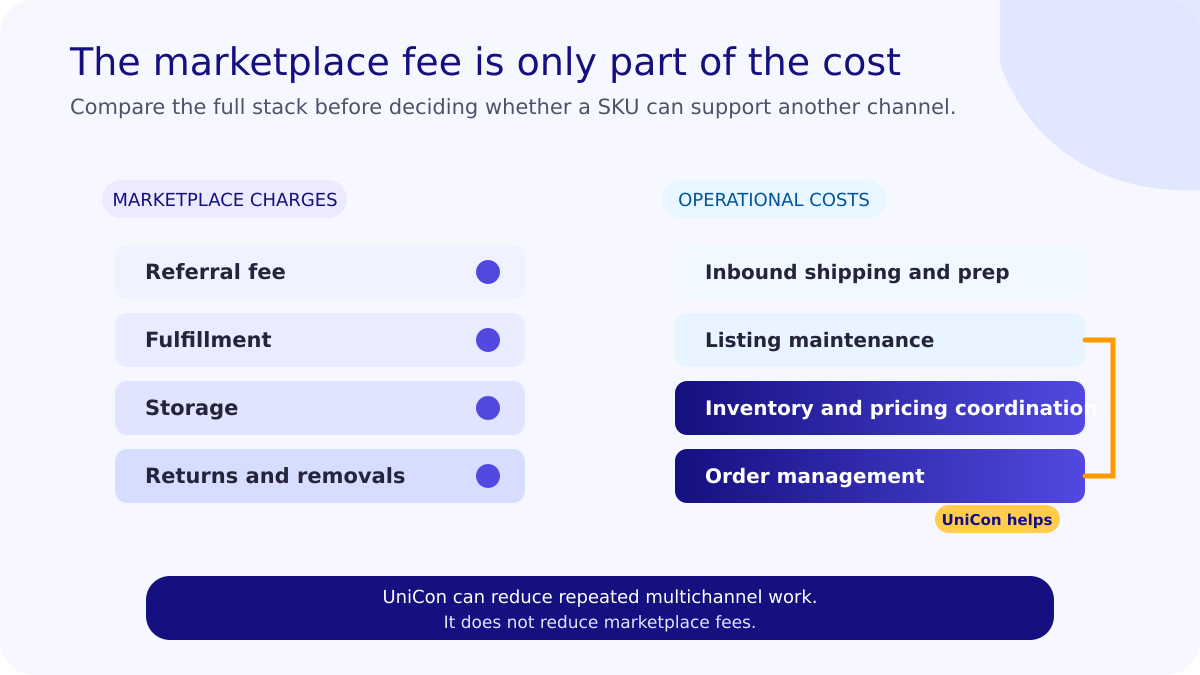
Referral and fulfillment fees are the obvious charges. The less glamorous costs often decide whether the product remains profitable.
Look beyond referral and fulfillment
Five costs that can quietly erode your margin
01
Storage and seasonal charges
Both marketplaces charge for storage, with higher costs possible during peak season or as inventory ages. WFS standard storage is $0.75 per cubic foot from January through September.
02
Inbound shipping and placement
Include carrier charges, prep and labeling, placement or distribution costs, and the work required to correct noncompliant shipments.
03
Returns and refunds
A refund does not always reverse every original cost. Review processing fees, refund administration, damaged inventory, and your actual return rate.
04
Removal and disposal
Include the cost to return, liquidate, or destroy slow inventory in your exit plan before the stock becomes a margin problem.
05
Seller-fulfilled expenses
Self-fulfillment replaces FBA or WFS fees with your own storage, labor, packaging, postage, software, returns, and delivery-performance requirements.
Estimate The Fee For Your Product
Start with one real SKU and use the same inputs for both marketplaces.
Enter the item’s sale price and marketplace category.
Add the packed weight and packed dimensions.
Choose FBA, WFS, or your actual seller-fulfilled cost.Add expected storage time, inbound shipping, and return costs.
Subtract the total from the sale price, then compare the amount left before product cost and advertising.
Product fee pressure check
Choose one answer in each group. You’ll get the fee areas to investigate first—not a made-up marketplace winner.
Check these areas first
Your selections point to the following pressure points. Confirm them with matching inputs in both marketplaces’ live calculators.
Expansion also requires you to maintain product data, inventory, pricing, and orders across channels.
UniCon can use an existing Amazon, Walmart, or Shopify catalog as a source for supported marketplaces. It also keeps inventory, pricing, and orders connected. It does not reduce referral fees, but it can reduce repeated channel-by-channel work.
Frequently Asked Questions
Does Walmart cost less to sell on than Amazon?
Sometimes. The lower total depends on your category, price, package size, fulfillment method, storage time, and return rate.
Does Walmart charge a monthly seller fee?
No. Walmart does not charge a setup or monthly subscription fee for Marketplace sellers. Referral, fulfillment, storage, and other service fees may still apply.
Is WFS cheaper than FBA?
It can be. Compare the packed item in both calculators, including inbound, storage, return, and removal costs.
Which marketplace is better for products below $10?
Amazon’s Low-Price FBA rates may help eligible products, while WFS adds a low-price fulfillment charge. Referral rates and category rules still affect the final result.
Should I include advertising in the fee comparison?
Yes, but keep it separate. Advertising, product cost, and overhead belong in your full profit model.
Final Tip: Compare Products, Not Platforms
Amazon and Walmart do not have one fixed cost advantage across every catalog. The answer changes with the product.
Keep the decision practical:
Compare one SKU at a time.
Use packed measurements and realistic storage time.
Include inbound shipping, returns, and an exit cost.
Recheck the live calculators before you send inventory or change price.
The best marketplace is not the one with the smallest fee in a headline. It is the one that gives your product a workable margin and an operation you can maintain.
Connect Your Marketplaces With UniCon
Use your existing catalog, keep inventory and pricing aligned, and manage orders across supported channels. Review current plans and supported marketplaces before you connect.