
Walmart WFS vs. Self-Fulfilled: Which Option Works Best for You?
Choosing between Walmart Fulfillment Services (WFS) and fulfilling orders yourself changes your costs and your daily work. A small, fast-selling item may benefit from Walmart's network. A bulky item or a product that needs special handling may be better suited to your warehouse or third-party logistics provider (3PL).
This guide compares what each method handles, what you pay for, and how to test the choice with your own products. You can use both methods across your catalog.
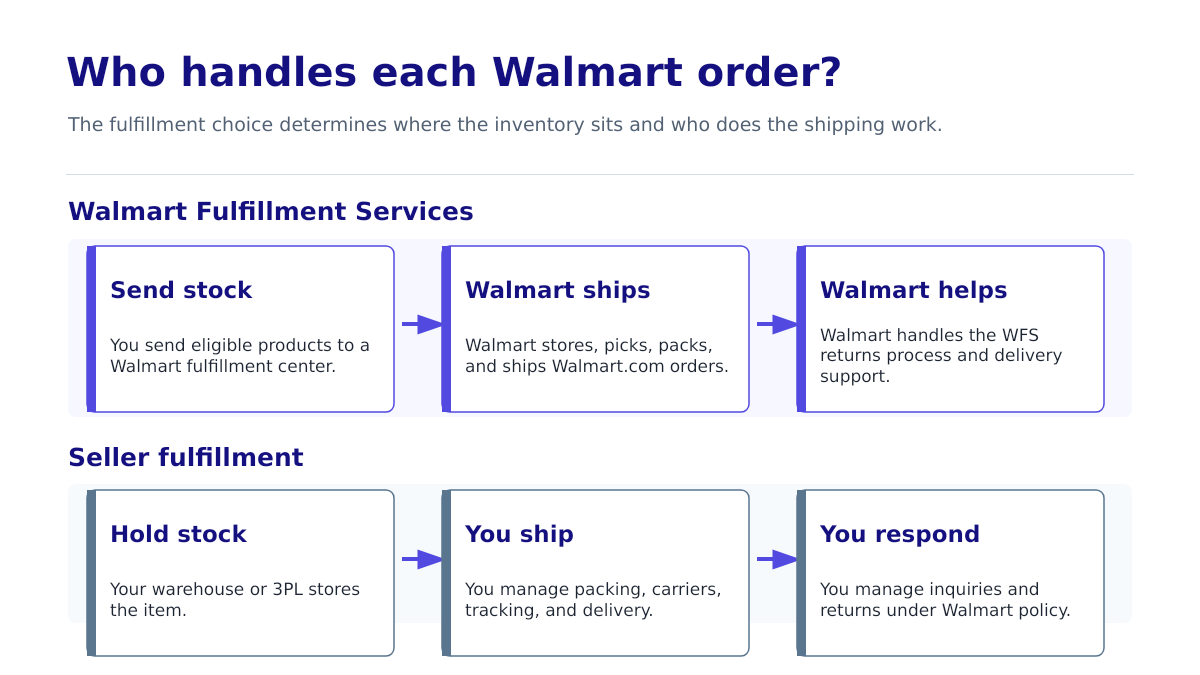
How Walmart Fulfillment Services (WFS) Works
WFS listings display a “Fulfilled by Walmart” tag, and eligible offers may show a fast delivery promise. Delivery speed depends on the item and destination. Heavier items shipped by ground can take more than two days, so don't budget around a TwoDay promise for every SKU.
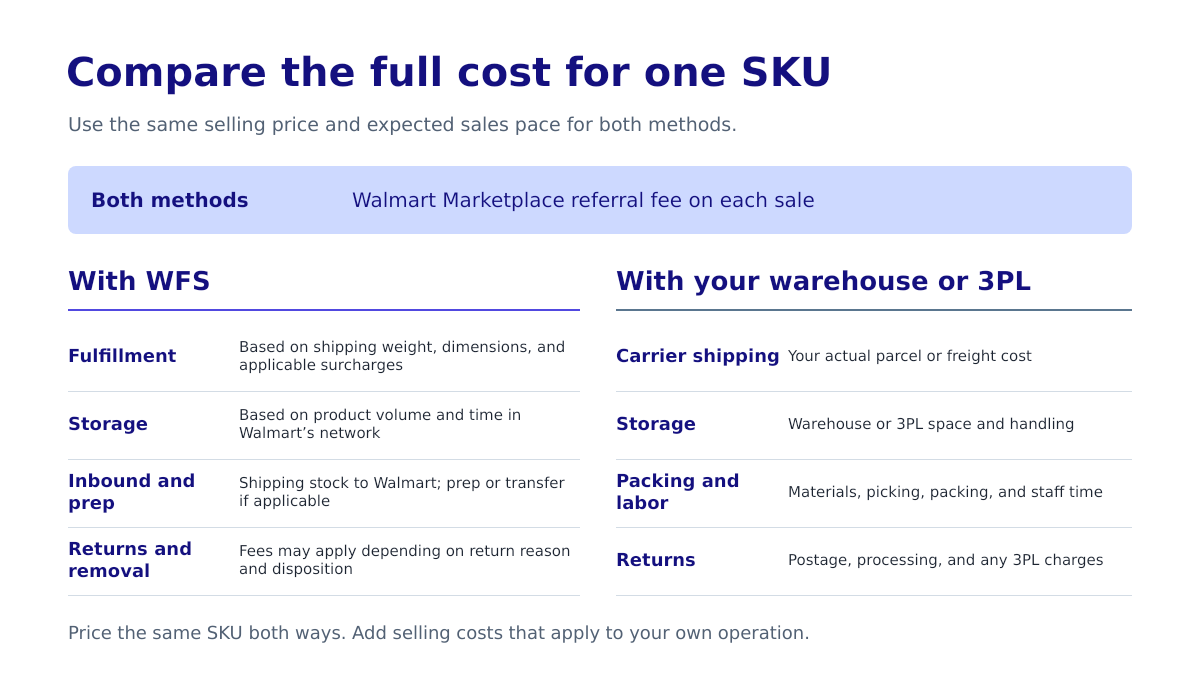
Walmart publishes WFS fulfillment and storage fees. The fulfillment fee depends on shipping weight and dimensions; apparel, hazardous materials, low-price items, or oversized parcels can add charges. You'll also pay the normal Walmart Marketplace referral fee when the item sells, plus any applicable inbound, prep, removal, or return costs.
Quick Check: Before sending inventory, run the item's packaged weight and dimensions through Walmart's WFS Cost Estimator. A light but large box can cost more than its scale weight suggests.
WFS has separate product rules. Walmart currently accepts eligible items weighing up to 500 lb. within its published size limits, with separate handling and fees for big and bulky products. Some hazardous items need disclosure and review. Books and temperature-controlled items appear on Walmart's WFS prohibited list, so check the current policy for each SKU before creating a shipment.
Source: Walmart WFS overview | WFS fees | WFS prohibited products
How Seller Fulfillment (SFS) Works
Seller-fulfilled offers can qualify for faster delivery. Walmart offers OneDay and TwoDay shipping methods, and eligible seller-fulfilled listings can earn a Walmart+ badge when the seller and item meet the current performance and delivery requirements. The badge is not reserved for WFS. Confirm the actual delivery promise and eligibility in Seller Center before advertising a faster service.
Seller Center's Simplified Shipping Settings can use your fulfillment locations, selected carriers, and carrier transit data to calculate more accurate delivery promises for eligible items. It doesn't support every fulfillment setup, including freight and some 3PL services. If you ship oversized goods or use a 3PL, check the applicable shipping method and return rules for those items.
Don't skip returns: Seller fulfillment gives you control of the return workflow, but Walmart still sets minimum return requirements and may accept eligible items at Walmart stores. Build return postage and processing time into the comparison.
Source: Simplified Shipping Settings | Walmart+ badge program | Seller-fulfilled returns policy
WFS vs. SFS At A Glance
Compare what matters to your SKU
Choose a factor to see what Walmart handles and what stays with you. Costs and delivery promises still depend on the item.
Daily fulfillment work
WFS
Send eligible inventory to Walmart. Walmart stores it and picks, packs, and ships Walmart.com orders.
Seller fulfillment
Store stock yourself or with a 3PL, then manage packing, shipping, tracking, and customer inquiries.
Compare the time you save with WFS against the control you keep with your own operation.
Delivery promise
WFS
Eligible items can display a fast promise. Heavier items shipped by ground may take more than two days.
Seller fulfillment
OneDay and TwoDay options exist if you can meet program and item requirements. Your settings and performance determine eligibility.
Check the actual offer shown to shoppers; neither method guarantees TwoDay on every SKU.
Product fit
WFS
Items must meet WFS size, weight, packaging, and product rules. Some hazardous items need review; books are prohibited.
Seller fulfillment
May suit an item that WFS cannot accept, as long as the product is permitted on Walmart Marketplace and you can meet shipping rules.
Check Marketplace eligibility first, then WFS eligibility separately.
Costs to compare
WFS
Fulfillment and storage fees, plus any applicable inbound, prep, return, or removal charges.
Seller fulfillment
Your warehouse or 3PL, carrier, packaging, labor, and return costs.
Both paths also carry the Walmart Marketplace referral fee when you make a sale.
Returns and support
WFS
Walmart manages the WFS returns process and fulfillment-related support. Return processing fees can still apply.
Seller fulfillment
You manage returns under Walmart policy. Walmart may accept some eligible seller-fulfilled returns in its stores.
Budget for returned units under either model.
Orders from other sales channels
WFS
Walmart Multichannel Solutions can fulfill eligible off-Walmart orders from WFS inventory. It requires WFS setup and has separate fees.
Seller fulfillment
Your warehouse or 3PL can fulfill your other channel orders using the rules and connections you set up.
Keep the marketplace listing, inventory sync, and physical fulfillment decisions distinct.
Source: WFS overview | WFS fees | Seller-fulfilled badge | MCS
Choose by SKU, Then Connect Your Channels
Which method should you price first?
Answer for one product. This gives you a starting point for comparison, not a fee quote or eligibility decision.
Source: WFS overview | Seller shipping settings
Frequently Asked Questions
Is WFS always cheaper than seller fulfillment?
Can I use WFS and seller fulfillment at the same time?
Can seller-fulfilled items show fast-delivery benefits?
Can I send books or hazardous products to WFS?
Can WFS ship an order placed on Amazon or my website?
Final Tip
Related Guides